
Differences Between LF VD RH and VC Refining Furnaces
author: Anna
2024-05-23
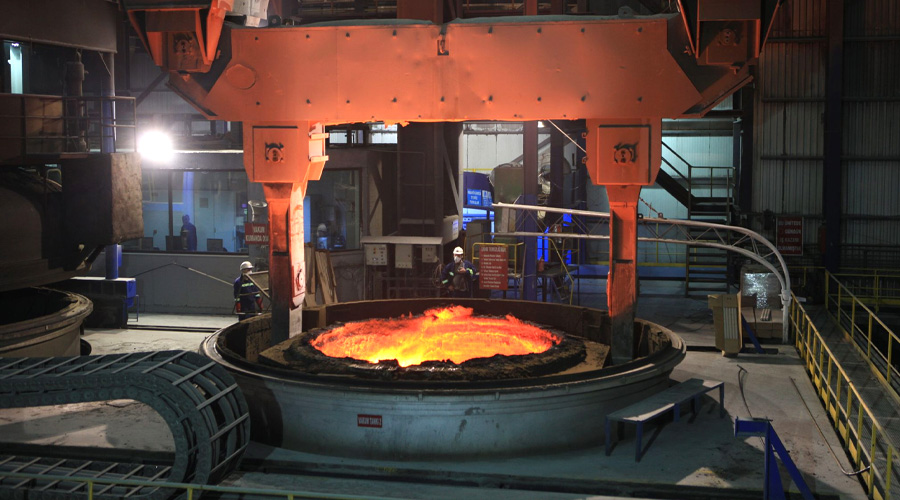
Differences Between LF, VD, RH and VC Refining Furnaces
LF is a ladle refining furnace, mainly used for desulfurization and heating of molten steel; VD is vacuum degassing, mainly used for dehydrogenation and denitrification of molten steel; RH is vacuum cycle degassing, mainly used for dehydrogenation of molten steel, usually equipped with an oxygen lance. Used for decarburization and heating; VC is for vacuum casting.
Steelmaking refers to controlling the carbon content (generally less than 2%), eliminating harmful elements such as P, S, O, and N, retaining or increasing beneficial elements such as Si, Mn, Ni, and Cr, and adjusting the ratio between elements to obtain the best performance.
Put the pig iron for steelmaking into a steelmaking furnace and smelt it according to a certain process to obtain steel. Steel products include steel ingots, continuous casting billets and direct casting of various steel castings.
Steel generally refers to steel rolled into various steel products. Steel is a ferrous metal but steel is not exactly equal to ferrous metal.
Steelmaking Process
(1) Feeding Feeding: The operation of adding molten iron or scrap steel and other raw materials into the electric furnace or converter is the first step in the steelmaking operation.
(2) Slag making: Slag making: an operation to adjust the composition, alkalinity, viscosity and reactivity of slag in steel and iron production. The purpose is to refine metals with required composition and temperature through slag-metal reaction. For example, the slag making and oxygen blowing operations of the oxygen top-blown converter are to generate slag with sufficient fluidity and alkalinity, which can transfer enough oxygen to the metal liquid level to reduce sulfur and phosphorus to below the upper limit of the planned steel type. And minimize the amount of splashing and slag spillage during oxygen blowing.
The Difference Between VD and RH Refining Ladles in Converter Steelmaking
- VD treatment is performed with slag, which will cause foaming. Therefore, the ladle is required to have a certain clearance, usually around 1000mm, to prevent molten steel from overflowing. Therefore, it is best for the ladle to be slim and long.
- During RH treatment, the vacuum tank is required to enter the ladle so that the circulation tube can be inserted into the molten steel. Since the ladle is an inverted trapezoid, the vacuum tank cannot descend indefinitely. Therefore, the ladle clearance is required to be short, usually around 300mm. Therefore, it is best for the ladle to be short and fat.
- LF has no special requirements for ladles.
Process Difference
- VD is mainly used for degassing and desulfurization, while VOD can also decarbonize. It belongs to vacuum refining equipment. The processing time is long and is generally matched with electric furnaces.
- RH is mainly used for degassing and decarburization. It belongs to vacuum refining equipment. The processing time is short and generally matched with the converter.
- LF is mainly used for desulfurization and temperature adjustment, and can be equipped with both rotary and electric furnaces.
Electric Arc Furnace Steelmaking Process
Submerged Arc Furnace Energy-saving Technology Combined Electrode System
Related Article

Electric arc furnace dust recovery and utilization is a key environmental issue in the metallurgical industry. During steelmaking, dust contains a variety of valuable metals, such as iron, zinc, lead, and cadmium. Recycling can conserve resources and reduce environmental pollution.
Recycling methods include wet, dry, and combined processes.
Recycling methods include wet, dry, and combined processes.
Electric Arc Furnace Dust Recycling

Ladle refining of refining furnace, also known as off-furnace refining, is a process in which molten steel, after primary refining in a converter or electric furnace, is transferred to a ladle for secondary refining. This process involves deoxidation, desulfurization, composition adjustment, and temperature control.
The Role of Ladle in Refining Furnace

The submerged arc furnace cover is a functional covering designed specifically for submerged arc furnaces. Its performance directly impacts the furnace's overall operating efficiency, safety, and service life.
In the prior art, two main types of furnace roofs are commonly used in the ferroalloy field: 1. Non-water-cooled, enclosed flat furnace roof with a hanging brick structure; 2. Semi-enclosed, water-cooled, tower-type roof with a tower structure.
In the prior art, two main types of furnace roofs are commonly used in the ferroalloy field: 1. Non-water-cooled, enclosed flat furnace roof with a hanging brick structure; 2. Semi-enclosed, water-cooled, tower-type roof with a tower structure.
Features and Advantages of Submerged Arc Furnace Cover

The electrode arm of an electric arc furnace is a key component in the furnace. Its primary function is to support the electrode and conduct the current, generating an arc to melt the metal.
The performance of the conductive cross arms directly impacts the production efficiency and energy utilization of the electric arc furnace. Today, let's explore its energy-saving effects.
The performance of the conductive cross arms directly impacts the production efficiency and energy utilization of the electric arc furnace. Today, let's explore its energy-saving effects.
Energy Saving Effect of Electric Arc Furnace Electrode Arm
Free Send Us Email for Solution
Contact Us
Xi'an Sanrui Electric Furnace Co., Ltd

WhatsApp/Wechat: +8615929555868

anna@srfurnace.com

Room 102, Building 7A, Free Trade Xintiandi, Fengdong Avenue, Fengdong New Town, Xi'an City, Shaanxi Province