
Optimization of Waste Slag Roasting Technology in Electric Furnace Ordinary Ferroalloy Production
author: Anna
2024-12-13

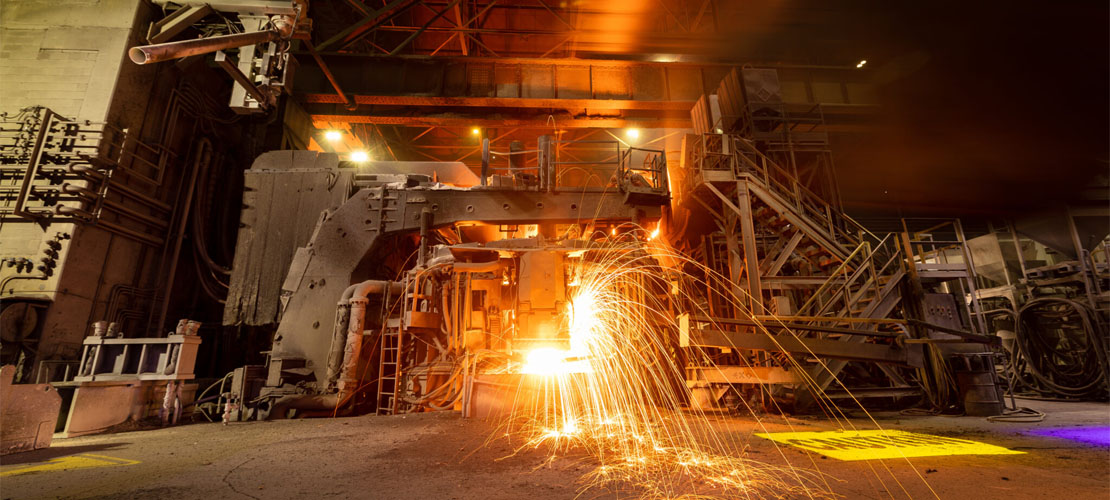
Optimization of Waste Slag Roasting Technology in Electric Furnace Ordinary Ferroalloy Production
With the rapid development of industrialization, electric furnace ordinary ferroalloy production has become one of the most important ferroalloy production methods. However, in this process, the treatment of waste slag has always been an important issue.
Waste slag contains a large amount of harmful substances. If not treated, it will have a serious impact on the environment and human health.
Therefore, how to roast the waste slag to improve its resource utilization rate and reduce its harm to the environment is an urgent problem to be solved in the production of electric furnace ordinary ferroalloys.
The optimization of waste slag roasting technology refers to a series of measures to improve the effect of waste slag roasting by improving roasting process, optimizing equipment and improving process parameters. Below, I will introduce the optimization of waste slag roasting technology in electric furnace ordinary ferroalloy production in detail from three aspects.
First, optimize the roasting process. In the production process of electric furnace ordinary ferroalloy, roasting is an important link in the treatment of waste slag. By improving the roasting process, the effective removal of harmful substances in the waste slag can be achieved. Choosing the appropriate roasting temperature and time is the key.
Through experimental research, it is found that when the roasting temperature is between 800℃ and 1000℃ and the time is maintained at 1 to 2 hours, the harmful substances in the waste slag can be effectively removed while maintaining the iron content in the alloy. Secondly, the roasting effect can also be improved by using a proper atmosphere.
For example, roasting in air with a moderate oxygen content can promote the oxidation and volatilization of harmful substances in the waste slag.
Secondly, optimize the equipment. In order to optimize the waste slag roasting technology, advanced equipment must be equipped. First of all, it is very important to choose a suitable roasting furnace type. Traditional roasting furnaces are usually made of graphite, which is prone to dust pollution.
Therefore, the use of environmentally friendly refractory materials such as ceramic materials can effectively reduce the generation of dust.
In addition, it is also very necessary to install appropriate airflow control devices and waste slag collection equipment. The airflow control device can adjust the intensity and time of the hot air on the roasted waste slag, thereby achieving a more uniform roasting effect. Waste slag collection equipment can effectively collect and treat harmful gases and dust released during the roasting process, thereby reducing pollution to the environment.
Finally, improve process parameters. By reasonably adjusting process parameters, the effect of waste slag roasting technology can be further improved. First, controlling the particle size of waste slag can affect the roasting effect. Studies have shown that when the particle size of waste slag is moderate, only a small amount of residual material cannot be removed by roasting.
Therefore, by optimizing the crushing and screening process of waste slag, a more uniform particle size distribution can be obtained, which improves the roasting effect. Secondly, it is also very important to reasonably select the air flow velocity of the roasting furnace.
Too fast air flow velocity will cause incomplete volatilization of harmful substances in the roasting waste slag, while too slow air flow velocity will lead to poor roasting effect. Therefore, determining the optimal air flow velocity through experimental research can improve the efficiency of waste slag roasting technology.
In summary, the optimization of waste slag roasting technology in the production of ordinary ferroalloys in electric furnaces is an important measure to achieve resource utilization and environmental protection.
By improving the roasting process, optimizing the equipment and modifying the process parameters, the slag roasting effect can be improved, harmful substances can be effectively removed, and the harm to the environment can be reduced.
However, we should also realize that the optimization of slag roasting technology is not a one-time job, and it requires continuous research and exploration to improve and improve.
I believe that in the near future, we will be able to find a more perfect slag roasting technology and make greater contributions to the production of ordinary ferroalloys in electric furnaces.
What Is VD VOD Vacuum Refining Furnace
Advantages of Ladle Refining Furnace
Related Article

Electric arc furnace dust recovery and utilization is a key environmental issue in the metallurgical industry. During steelmaking, dust contains a variety of valuable metals, such as iron, zinc, lead, and cadmium. Recycling can conserve resources and reduce environmental pollution.
Recycling methods include wet, dry, and combined processes.
Recycling methods include wet, dry, and combined processes.
Electric Arc Furnace Dust Recycling

Ladle refining of refining furnace, also known as off-furnace refining, is a process in which molten steel, after primary refining in a converter or electric furnace, is transferred to a ladle for secondary refining. This process involves deoxidation, desulfurization, composition adjustment, and temperature control.
The Role of Ladle in Refining Furnace

The submerged arc furnace cover is a functional covering designed specifically for submerged arc furnaces. Its performance directly impacts the furnace's overall operating efficiency, safety, and service life.
In the prior art, two main types of furnace roofs are commonly used in the ferroalloy field: 1. Non-water-cooled, enclosed flat furnace roof with a hanging brick structure; 2. Semi-enclosed, water-cooled, tower-type roof with a tower structure.
In the prior art, two main types of furnace roofs are commonly used in the ferroalloy field: 1. Non-water-cooled, enclosed flat furnace roof with a hanging brick structure; 2. Semi-enclosed, water-cooled, tower-type roof with a tower structure.
Features and Advantages of Submerged Arc Furnace Cover

The electrode arm of an electric arc furnace is a key component in the furnace. Its primary function is to support the electrode and conduct the current, generating an arc to melt the metal.
The performance of the conductive cross arms directly impacts the production efficiency and energy utilization of the electric arc furnace. Today, let's explore its energy-saving effects.
The performance of the conductive cross arms directly impacts the production efficiency and energy utilization of the electric arc furnace. Today, let's explore its energy-saving effects.
Energy Saving Effect of Electric Arc Furnace Electrode Arm
Free Send Us Email for Solution
Contact Us
Xi'an Sanrui Electric Furnace Co., Ltd

WhatsApp/Wechat: +8615929555868

anna@srfurnace.com

Room 102, Building 7A, Free Trade Xintiandi, Fengdong Avenue, Fengdong New Town, Xi'an City, Shaanxi Province